

 go back
Summary
Develop an open, uniform, secure and standards-based IIoT communication solution between sensors, actuators, controllers and the cloud that meets all the requirements of industrial automation – factory automation but also process automation. For factory automation special requirements like deterministic communication, functional safety and motion are optional features.
Field Level Communications (FLC) Initiative and FLC Working Groups
The OPC Foundation has launched the Field Level Communications (FLC) Initiative in order to extend OPC UA to the field level addressing all requirements of factory automation and process automation (see Figure 1). Vendor independent end-to-end interoperability between field level devices is provided for all relevant industrial automation use cases, including real-time, functional safety, instrumentation, motion and I/O, all requiring secured information exchange. This is part of the overall strategy of the OPC Foundation to support an open, unified, standards-based IIoT communication solution between sensors, actuators, controllers and cloud.

Figure 1: OPC UA FX – Extending OPC UA to the Field
Goal
The goal of the FLC Initiative is to deliver an open, cohesive approach to implement OPC UA including TSN and associated application profiles. This will advance the OPC Foundation providing vendor independent end-to-end interoperability into field level devices for all relevant industry automation use-cases. The OPC Foundation vision of becoming the worldwide industrial interoperability standard is advanced by integrating field devices and the shop floor.
A new set of working groups is identifying, managing and standardizing the OPC UA relevant topics focused on industrial automation including:
- harmonization and standardization of application profiles like I/O, motion control, instrumentation and functional safety
- standardization of OPC UA information models for field level devices in online and offline scenarios e.g. device description resp. diagnostics
- mapping of OPC UA application profiles related to real-time operations on networks including Ethernet/TSN, Ethernet-APL (Advanced Physical Layer)/SPE (Single Pair Ethernet), Ethernet, WLAN or cellular (e.g. 5G)
- definition of certification procedures
The working groups will closely align with the TSN Profile for Industrial Automation (TSN-IA-Profile) which will be standardized by the IEC/IEEE 60802 standardization group. This will help ensure that a single, converged TSN network approach is maintained so that OPC UA can share one common multi-vendor TSN network infrastructure together with other applications.
This initiative integrates well with existing joint working groups engaged in ongoing companion specification e.g. description of machines.
The extensions for OPC UA to cover the use cases and requirements for the field-level are named OPC UA FX (Field eXchange).

Steering Committee and Subgroups
Participation in the FLC Initiative’s Steering Committee is open to all OPCF member companies that sign a separate agreement.
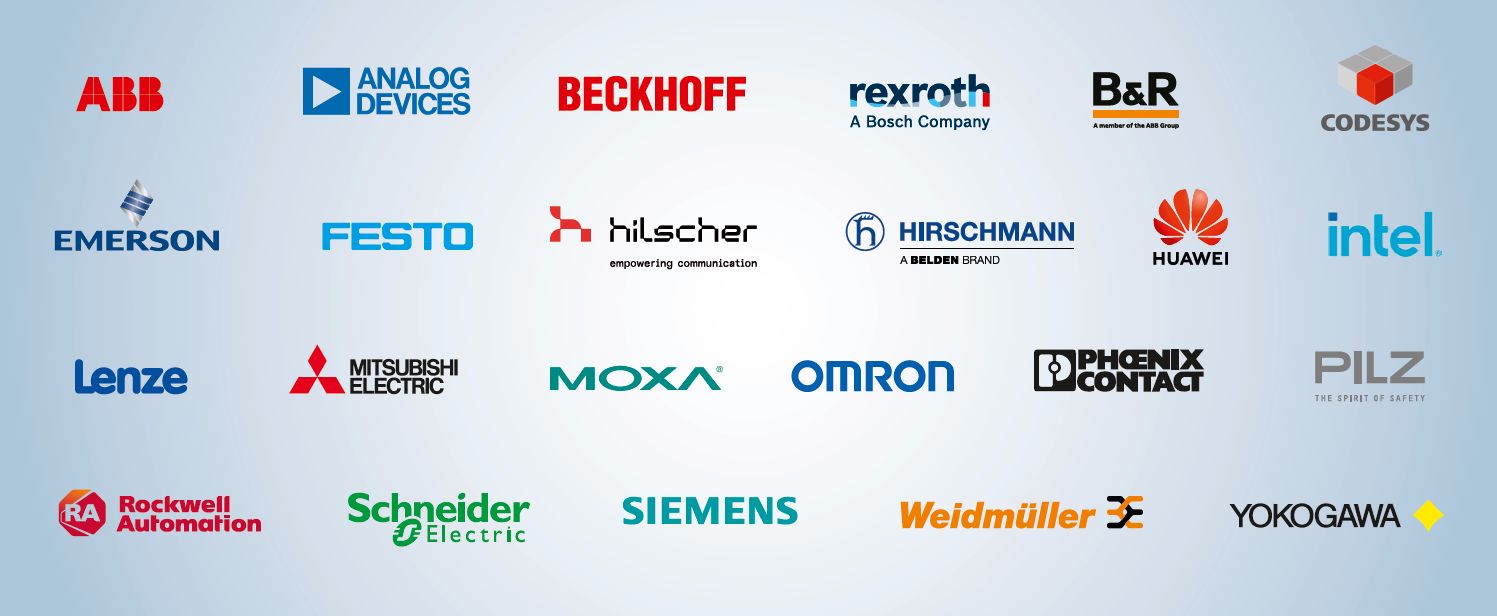
Figure 3: Members of the FLC Initiative’s Steering Committee
Steering Committee
The responsibility of the FLC Steering Committee is to manage and control the FLC-related technical development and the FLC-related marketing activities in alignment with the committees and activities of the OPC Foundation.
FA/PA Requirements Subgroup
This working group defines functional and non-functional requirements for applications and use cases in Factory and Process Automation. Furthermore, the group gives recommendations for required and optional functionality. Two subcommittees have been established that elaborate specific requirements for cyber security and motion control.
TSN Expert Assessment Subgroup
This working group is responsible for facilitating a close alignment between the IEC/IEEE 60802, IEEE 802.1 and OPC UA PubSub TSN.
Certification Requirements Subgroup
This working group is responsible for analyzing the requirements for testing and certifying OPC UA FX controllers and devices.
Marketing Working Subgroup
Responsible for all marketing activities related to the FLC Initiative to ensure that all stakeholders in FLC technology (users, system integrators, machine builders, software and device vendors) can understand the unique value offered by FLC. This group also ensures that the device and software provider community can understand the technical approaches and that support is available to implement FLC in their offerings.
Technical Working Groups

Figure 4: FLC Working Group structure
Architecture (Core) Working Group
Responsible overall to deliver a set of specifications that support the development of products (controllers and field devices). This group analyzes technical requirements to achieve target use cases, creates high level design documents, defines the architectural framework for sub working groups and reviews resp. integrates specification content from sub working groups.
Base Facet Working Group
Responsible for driving inter-vendor interoperability of automation components (i.e., controllers and devices) by defining the common (i.e., not specific to a particular type of automation component) interfaces, behaviors and state machines of devices and controllers conformant to OPC UA FX specifications. Transport and protocol independent state machines and connection management is covered in this working group.
Offline Engineering Working Group
This working group defines mechanisms to allow engineering of the system before the physical components are delivered to a project. The offline configuration scheme is developed for simple, complex and modular field devices and other OPC UA FX components. The scope of work includes the mechanism for an engineering tool to deploy an offline configuration to the system when it comes online.
Networking Working Group
The overall goal of this Working Group is to drive inter-vendor interoperability of automation field devices by defining the communication interfaces and behaviors (protocols and services) of the lower layers of the OSI model for devices conformant to OPC UA FX specifications that operate on Ethernet networks or Wireless networks (including Wi-Fi and 5G) with and without TSN capabilities. During the course of development some of the topics may be tackled by the IEEE/IEC 60802 group or other WGs of the OPC Foundation.
Safety Working Group
Responsible to support inter-vendor interoperability of safety devices such as safety controllers, functionally safe digital and analog IO, and electric drives with safety functions. To achieve this, the WG will specify interfaces and behaviors, which are typical for safety devices. OPC UA Safety is using a black channel approach to specify all safety communication for controller-to-controller as well as controller-to-device.
Motion Working Group
Responsible to drive interoperability of motion devices, like standard drives, frequency converters, positioning drives, servo drives and motion encoders. The WG will add to the OPC UA FX base specifications the definition of interfaces and behaviors for motion devices.
Instrumentation Working Group
Responsible to drive interoperability of instrumentation devices, such as flowmeters, analyzers, transmitters (including temperature, pressure, level, flow), flame detectors, valves and valve controllers. The WG will add to the OPC UA FX base specifications the definition of interfaces and behaviors for instrumentation devices.
Prototyping Working Group
Responsible to generate concepts for prototyping and to coordinate the implementation of prototypes in order to verify the specification drafts that are generated by the FLC working groups. The group also works on possible optimizations and propose specification enhancements to the working groups that generate specifications.
Test Development Working Group
Responsible for all work to enable the certification of OPC UA FX devices. The group is defining test cases based on conformance units, profiles & facets that are defined by the various FLC-related working groups. In addition, the group coordinates the test script development in collaboration with the OPC Compliance Work Group.
Brochures / Whitepapers / Videos
- FLC Flyer (4 pages): Click here
- FLC Technical Paper (40 pages): Click here
- OPC UA Safety Brochure (24 pages): Click here
- Ethernet to the Field (18 pages): Click here
- Integration of OPC UA in 5G Networks (38 pages): Click here
- Panel Discussion about OPC UA FX (SPS 2024): Click here
- OPC UA Day Field eXchange (FX) 2022:
- Day1: Click here
- Day2: Click here
- Day3: Click here
- Testimonials from members of the FLC Initiative’s Steering Committee: Click here
See also Field Level Initiative.
Working Group Type
Internal
Status
Active
Classification(s)
Core UA Topics
