

Standardize and Simplify Connectivity and Semantic Information
Models of Energy-related Systems, Services and Devices
The world of Energy is changing. There are multiple transitions in progress like the move from fossil fuels to renewable energy, and centralized energy generation to decentralized micro grids. Energy Systems are now more than ever considered critical infrastructure and must be resilient to any kind of malicious attacks – physically as well as cyber.
Download Energy brochure here
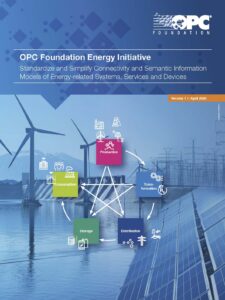
An energy eco-system has a core set of components that can be found in any size system – from large utility grade systems to small household microgrids:
- Energy Production – the facility of devices that create the energy. Traditionally these are Gas, Nuclear or coal plants centrally located somewhere near a city or state. Renewable production sites using Solar,
Wind or Hydro are located where their natural resource is located. Energy Distribution – energy is very rarely used where it is produced and must be transported/distributed to the energy consumer. Even in microgrids, there will be power lines from i.e. solar panels to inverters. - Energy Transformation – sometimes it is more efficient to transform the energy into another media for better transport. Hydrogen is one of these media that can be transported via pipeline or trucks to locations where it is needed.
- Energy Storage – a very important part of modern energy management is storing the energy either at the production site or the consumer site to balance out the so call “Duck Curve”. This curve describes the mismatch between power generation (for example solar energy is most abandoned during midday) and power consumption (but during midday everyone is at and the energy consumption is low). Energy storage allows us to buffer this energy during highproduction
times and use it later when it’s needed most. - Energy Consumption – this can be residential, commercial and industrial consumers. These consumers have different consumption curves and need to be balanced with the available production and storage options.
Traditionally energy systems have been developed and designed by large utility companies in almost black-box environments with proprietary connectivity and little focus on cyber security. With energy production
moving closer to the energy consumer, more options for transportation and storage, traditional system design are in need of better connectivity solutions. In 2024. OPC UA has started to look at the whole energy market to help simplify, standardize and improve the resilience of connection points. Not only among the five major energy components but also within.
One important standard that is widely used in substations, wind farms, solar array and other large utility size installations is the IEC 61850. The OPC UA Wind and Solar PV Operations and Monitoring (SPOM) working group, together with the
IEC 61850-20 working group has started mapping the 61850 models to OPC UA models. Many other groups have started within the Energy Initiative and you can learn more about our activities in the following pages of this brochure.
We are planning many more working groups over the coming years with the goal to develop new energy systems – no matter large or small – in much shorter time and with much better resiliency against cyberattacks.
Contact: Chris Muench, Founder & CEO Hyviva, Chair of OPCF Energy Initiative, email chris_at_hyviva.com